Shed wind ratings in Queensland: regions, classes and why they matter
Australian conditions · Updated · 6 min read · BWG Sheds
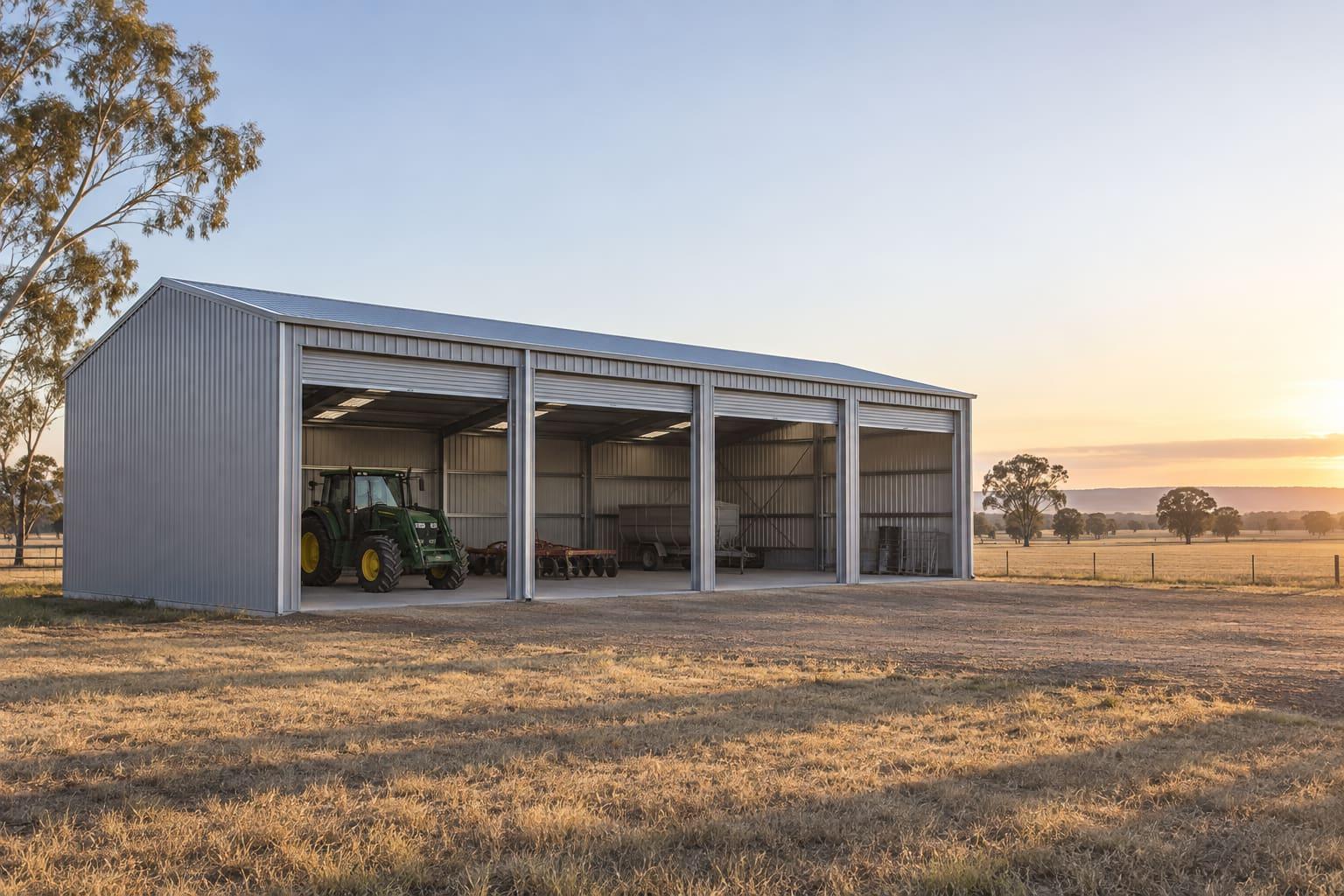
Short answer
Your shed's wind rating comes from the site, not the brochure. The engineer works out a design wind speed from the wind region under AS/NZS 1170.2, the terrain, shielding and topography, and the building's importance level. On Geoscience Australia's indicative map, Brisbane, Toowoomba, the Gold Coast, the Sunshine Coast, Gympie, Maryborough, Hervey Bay and Childers are Region B1, while Bundaberg, Agnes Water and Gladstone are cyclonic Region C.
- Wind regions: A and B (non-cyclonic), C and D (cyclonic); B has been split into B1 and B2.
- Wind classes N1 to N6 apply in Regions A and B; C1 to C4 in Regions C and D.
- In Wide Bay the B1/C line falls between Childers and Bundaberg; Gladstone is Region C.
- Farm sheds are an example of Importance Level 1; houses are Importance Level 2.
- The Geoscience Australia dataset is indicative only: the Standard's map and your engineer decide.
Wind region, wind class and design wind speed
Three terms get mixed up. The wind region is a broad zone from the Australian and New Zealand wind loading standard, AS/NZS 1170.2, based on the strongest winds expected in that part of the country. The NCC defines design wind speed as the design gust wind speed for the site, calculated to AS/NZS 1170.2 or AS 4055. Wind classes are the shorthand used for houses and similar buildings: N1 to N6 in the non-cyclonic Regions A and B, and C1 to C4 in the cyclonic Regions C and D.
For a steel shed the engineer does not stop at the region. The site wind speed also depends on terrain category (open paddock versus suburb), shielding from surrounding buildings and trees, and topography such as a hill crest or escarpment. The Australian Steel Institute's ShedSafe SiteCheck, for example, calculates site wind speed from region, topography, shielding and terrain, and the engineer signs it off before manufacture.
Which Queensland areas are in which region
Geoscience Australia publishes its interpretation of the AS/NZS 1170.2:2021 wind regions as a dataset. We tested towns across our service areas against it on 25 September 2026. The dataset is expressly not for design, and Figure 3.1 of the Standard prevails, but it shows the pattern clearly.
| Area | Indicative region |
|---|---|
| Brisbane, Ipswich, Caboolture, Beaudesert | B1 |
| Gold Coast (Southport), Sunshine Coast (Maroochydore) | B1 |
| Toowoomba, Gatton, Dalby, Warwick, Kingaroy | B1 |
| Gympie, Maryborough, Hervey Bay, Childers | B1 |
| Bundaberg, Agnes Water, Gladstone, Rockhampton | C (cyclonic) |
In Wide Bay, the boundary between Region B1 and cyclonic Region C falls between Hervey Bay and Childers on one side and Bundaberg on the other. Sites near that line, and anywhere around Gladstone, Tannum Sands, Boyne Island and Agnes Water, need the engineer to check the Standard directly.
Region C has a practical approval consequence as well: Queensland's small-shed exemption from building approval (10 m² and under) does not apply in the tropical cyclone area.
Building around Gladstone or Agnes Water? We engineer sheds for the cyclonic region and the coastal exposure together.
Sheds in the Gladstone RegionImportance level
The NCC assigns each building an importance level based on the hazard to life and other property if it fails. Importance Level 1 covers buildings that present a low degree of hazard, and the NCC Guide gives farm buildings and farm sheds, isolated minor storage facilities and minor temporary facilities as examples. Low-rise residential construction is Importance Level 2. 'Other property' includes any building on the same or an adjoining allotment and a road, so a shed close to a house, a neighbour or a road may not justify Importance Level 1. The engineer decides.
Terrain, shielding and hills on rural sites
Two sheds in the same wind region can still have different design wind speeds. A shed in the middle of open, flat paddock country has little around it to slow the wind, while one tucked among houses or trees is shielded. A shed near the crest of a ridge, on an escarpment or on the Great Dividing Range sees wind speed up over the top of the slope. The engineer allows for terrain category, shielding and topography under AS/NZS 1170.2, which is why the exact position on your property matters, not just the town.
Shielding also changes over time. Trees get cleared and neighbouring buildings come and go, so engineers are generally careful about relying on it. If you are choosing between two positions on a block, ask how each would affect the rating before you commit.
What a higher wind rating changes
- Heavier or deeper frame sections, closer frame spacing or more bays.
- Heavier purlins and girts, often at closer centres.
- More bracing and stronger connections at the knee and apex.
- More fasteners and larger footings to resist uplift.
- Wind-rated roller doors, because a large door that fails lets wind pressurise the shed.
Under-specifying risks failure in a storm. Over-specifying costs money for steel you do not need. That is why the rating should be worked out for the address and written on the engineering, rather than picked from a list.
Requirements depend on your property, proposed structure and local planning/building controls.
Give us your address and we will quote a shed engineered for that site.
Request a site-rated quote