Shed guides
Straight answers to the questions Queensland shed buyers ask before they order: approvals, sizes, kits, costs, wind and coastal conditions. Every rule we quote links to its official source.
Shed approvals
Do I need council approval for a shed in Queensland?
In Queensland only a very small shed skips building approval: a plan area of 10 m² or less (overhangs included), no side longer than 5 m, no more than 2.4 m high with a mean height of 2.1 m or less, and not in wind Region C. Anything bigger needs building approval from a building certifier. Even an exempt shed must still meet the building codes, siting rules and your council's planning scheme.
8 min read
Do I need approval for a shed in the Toowoomba Region?
In the Toowoomba Region a shed needs no building approval only if it is under 10 m², no more than 2.4 m high, no side is longer than 5 m and the mean height of any wall on a boundary is under 2.1 m. Rural sheds more than 200 m from every boundary and used for an on-site rural use can also be accepted development. Everything else needs building approval, and the planning scheme, zone and overlays can add requirements.
6 min read
Do I need approval for a shed in Brisbane?
In Brisbane a shed needs no building approval only if it has a plan area of 10 m² or less, is no more than 2.4 m high with a mean height of 2.1 m or less, has no side longer than 5 m and does not affect other structures or a pool fence. Larger sheds need building approval from a certifier. On the planning side council says sheds are generally accepted development, subject to requirements in residential zones.
6 min read
Farm sheds
Do farm sheds need building approval in Queensland?
Not always. Under the Building Regulation 2021, Schedule 2 section 4, a Class 10 building on land used for agricultural, floricultural, horticultural or pastoral purposes is exempt where no part of it is within 200 m of a road or a property boundary. Closer than that, or where the shed is classified as a Class 7 or 8 farm building, building approval from a certifier applies, and Queensland's own farm building code, QDC MP 3.7, sets the concessions.
7 min read
Shed planning
What size shed do I need?
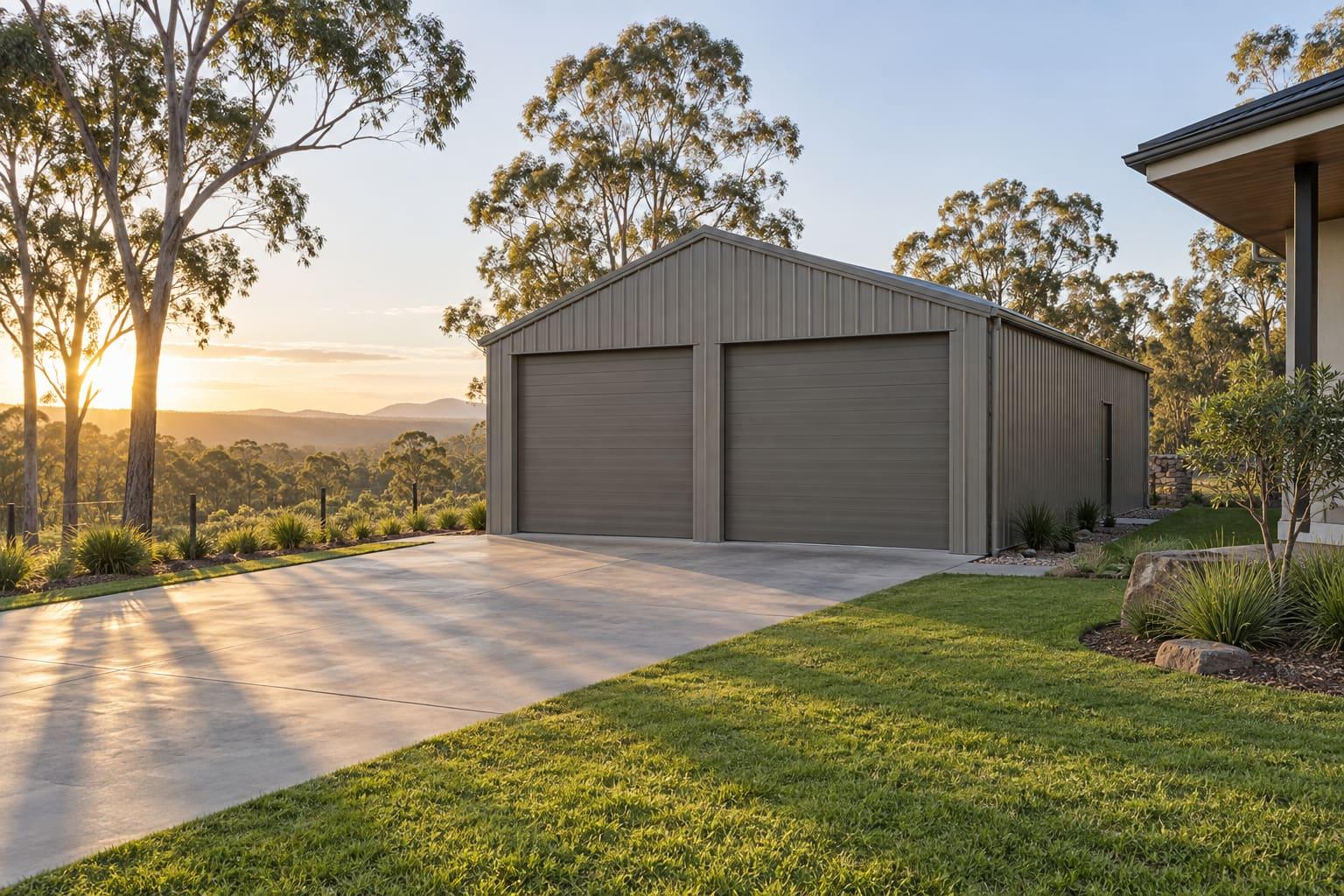
Start from the biggest thing going inside. For cars, the Queensland Housing Code sets a minimum space in a double garage of 5.5 m wide by 6 m deep, and a large design car (B99) is 5.2 m long and 1.94 m wide. A caravan can legally be up to 2.5 m wide and 4.3 m high, so the door, not the floor, usually decides the shed. For machinery, measure your largest machine and add working clearance on every side.
7 min read
What affects the cost of a shed in Queensland?
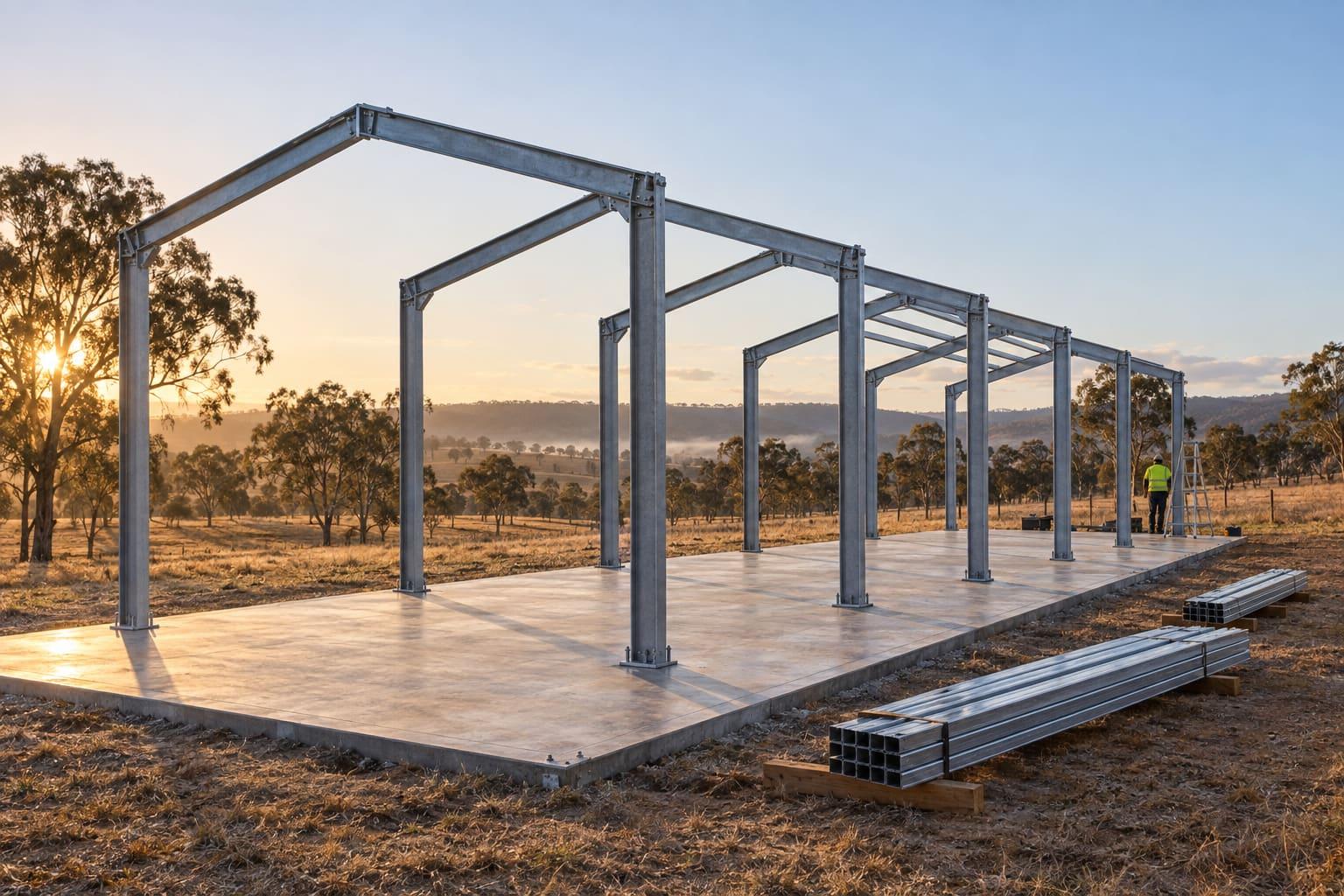
There is no honest single price for a shed, because the same floor area can cost very different amounts depending on the site's wind rating, the span and wall height, the doors, the slab your soil needs, the cladding, the delivery distance, approval costs and whether you build it yourself. BWG Sheds quotes each shed for its actual site. The useful thing to do before quoting is fix those variables so every quote you compare prices the same shed.
6 min read
DIY shed kits
Shed kit, supply-and-install or custom design: which suits you?
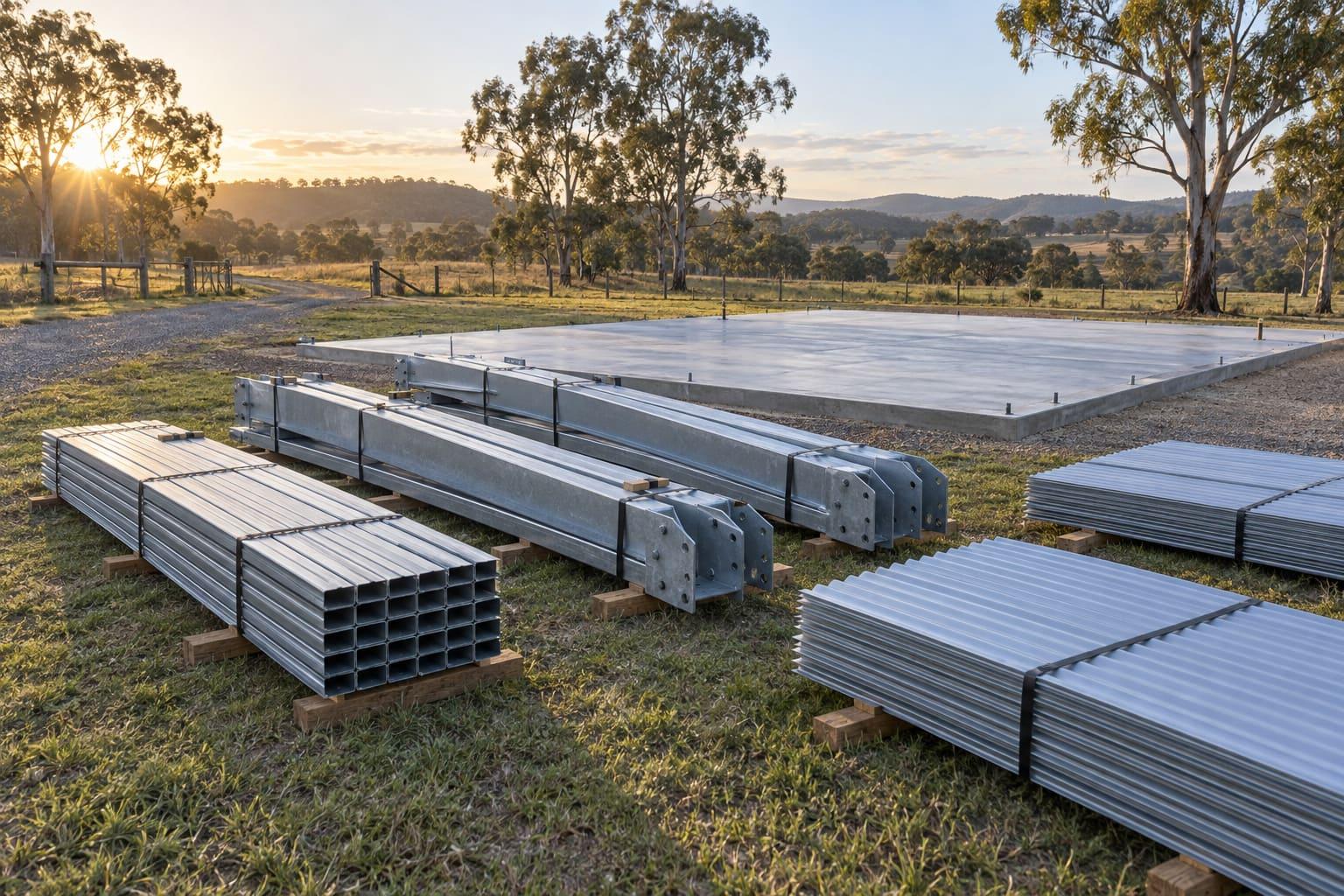
A DIY kit costs you time and responsibility instead of labour: you organise the slab, the approval, the crew and the safety, and an owner-builder permit is needed above $11,000 including GST. Supply-and-install hands the build to a licensed builder. A custom design sits underneath both: the shed is sized and engineered for your site and use. The right choice depends on your skills, equipment, the shed's size and whether it is a farm or residential building.
7 min read
Building a shed kit yourself in Queensland: the owner-builder guide
Yes, you can build a garage, carport or residential shed kit yourself on your own land. If the work is valued at more than $11,000 including GST, counted as if a licensed contractor supplied the materials and labour, you need a QBCC owner-builder permit. You still need building approval from a certifier, you are responsible for site safety, and owner-builders cannot build farm, commercial or industrial buildings.
7 min read
Australian conditions
Shed wind ratings in Queensland: regions, classes and why they matter
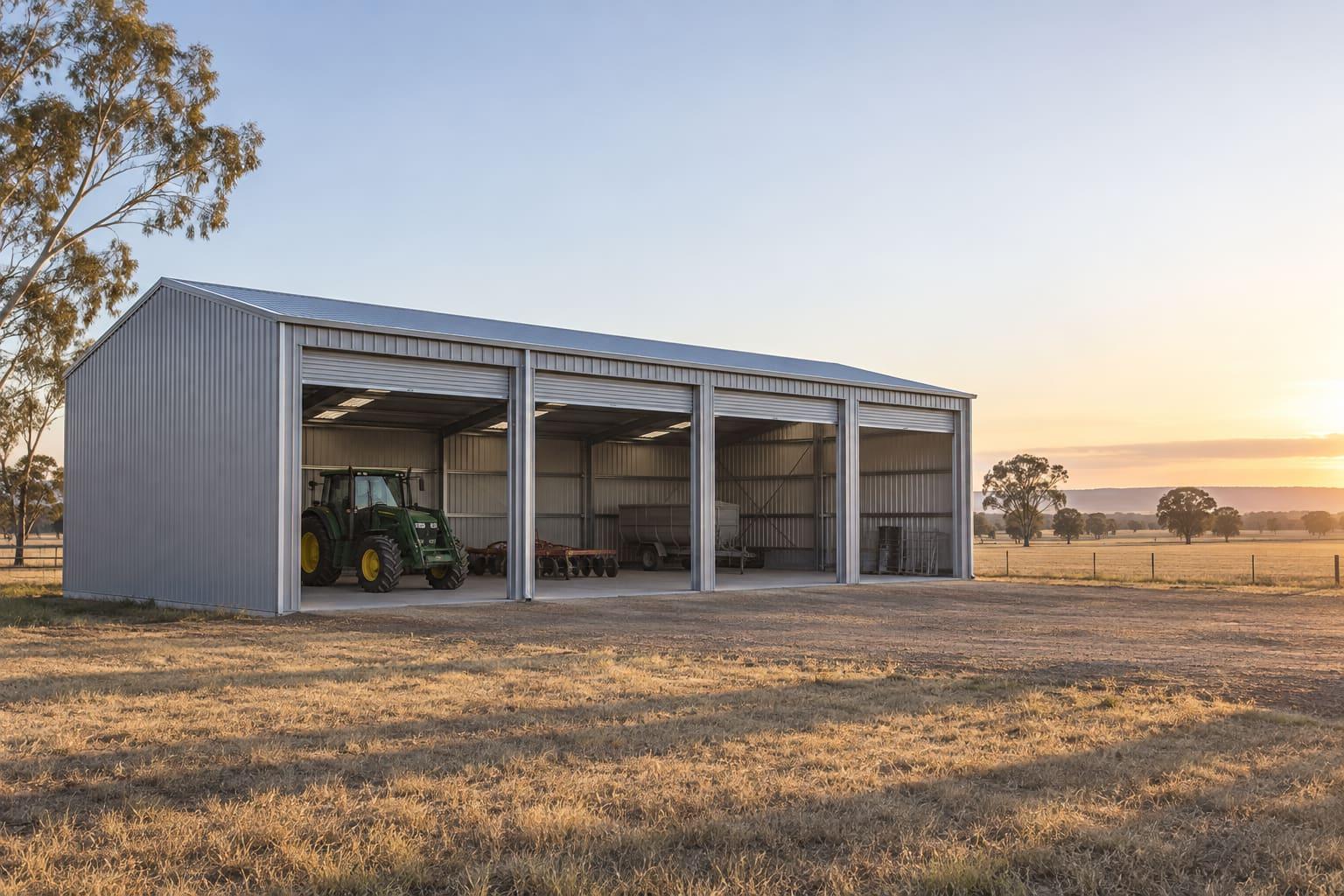
Your shed's wind rating comes from the site, not the brochure. The engineer works out a design wind speed from the wind region under AS/NZS 1170.2, the terrain, shielding and topography, and the building's importance level. On Geoscience Australia's indicative map, Brisbane, Toowoomba, the Gold Coast, the Sunshine Coast, Gympie, Maryborough, Hervey Bay and Childers are Region B1, while Bundaberg, Agnes Water and Gladstone are cyclonic Region C.
6 min read
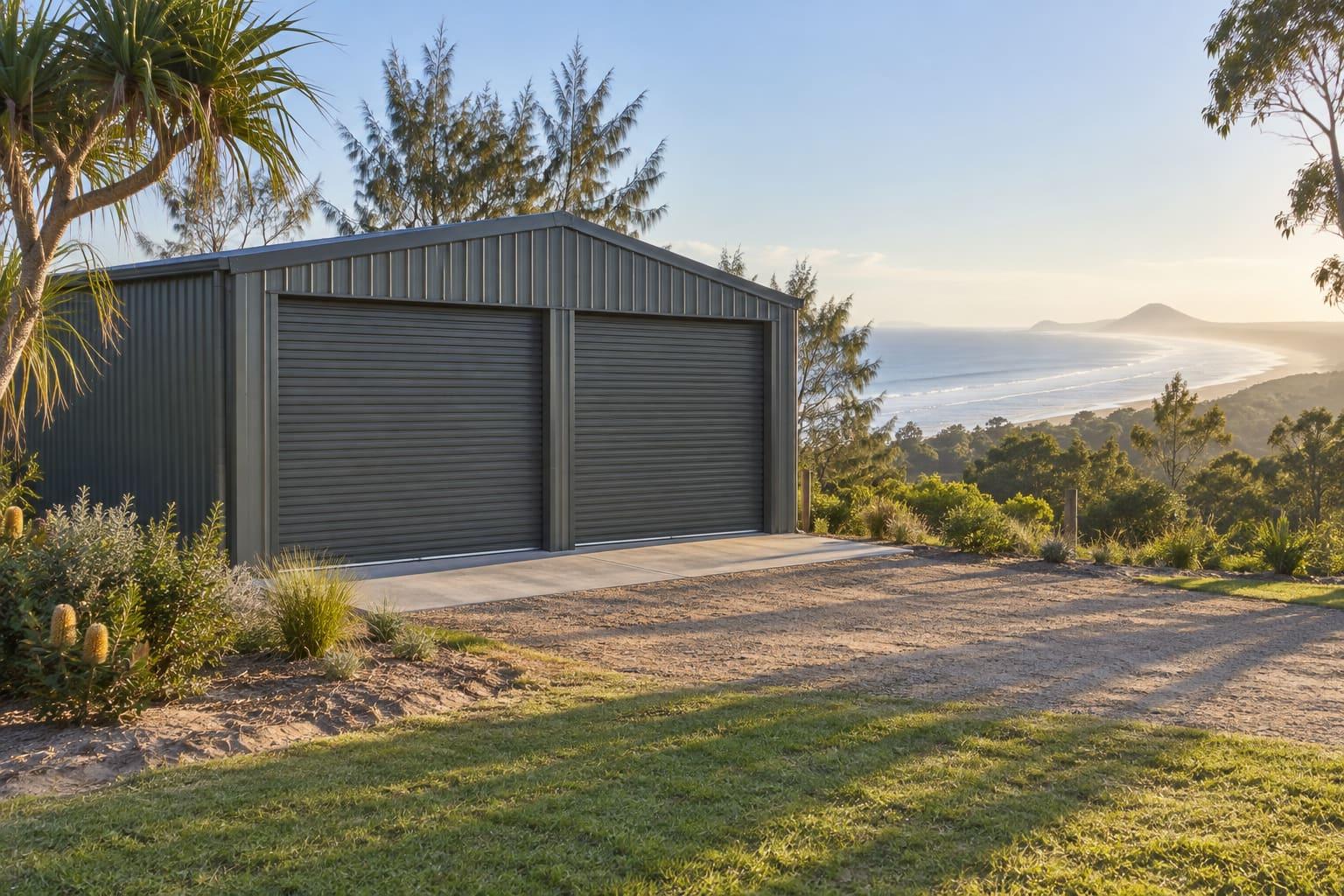
COLORBOND® or ZINCALUME® steel for a shed near the Queensland coast?
It depends on how close the shed is to breaking surf or salt water, and walls need more distance than roofs. BlueScope's guides recommend ZINCALUME steel and standard COLORBOND steel roofing more than 200 m from breaking surf, COLORBOND Ultra steel from 100 m, and SUPERDURA Stainless closer. For walls, which rain washes less, the distances rise to over 1,000 m for ZINCALUME and over 800 m for standard COLORBOND steel.
6 min read
Bushfire and flood overlays: what they mean for your shed
It can. In a designated bushfire-prone area, a Class 10a shed or garage associated with a house must meet the bushfire standard, and Queensland Government guidance applies it to outbuildings within six metres of a dwelling. Queensland's flood building code, MP 3.5, does not list Class 10 sheds, but council planning schemes can still control where a shed goes in a flood area. Check your property's overlays before you choose a position.
6 min read
Shed design
Shed slabs and footings in Queensland: site classes and preparation
The slab and footings are designed for the ground and the wind. Under AS 2870, sites are classified by how much the soil moves: A (sand and rock), S, M, H1, H2 and E for increasingly reactive clay, and P for problem sites. The NCC's standard footing tables only cover classes A, S and M; for H, E and P sites the design must follow AS 2870. A shed's engineering also sets the footings that hold the frame down against wind uplift.
6 min read
Tell us what the shed has to do.
Send the site, the use and a rough size. We'll come back with the questions that matter and a quote.